Copyright © Everyday Narrative 2024. All rights reserved.

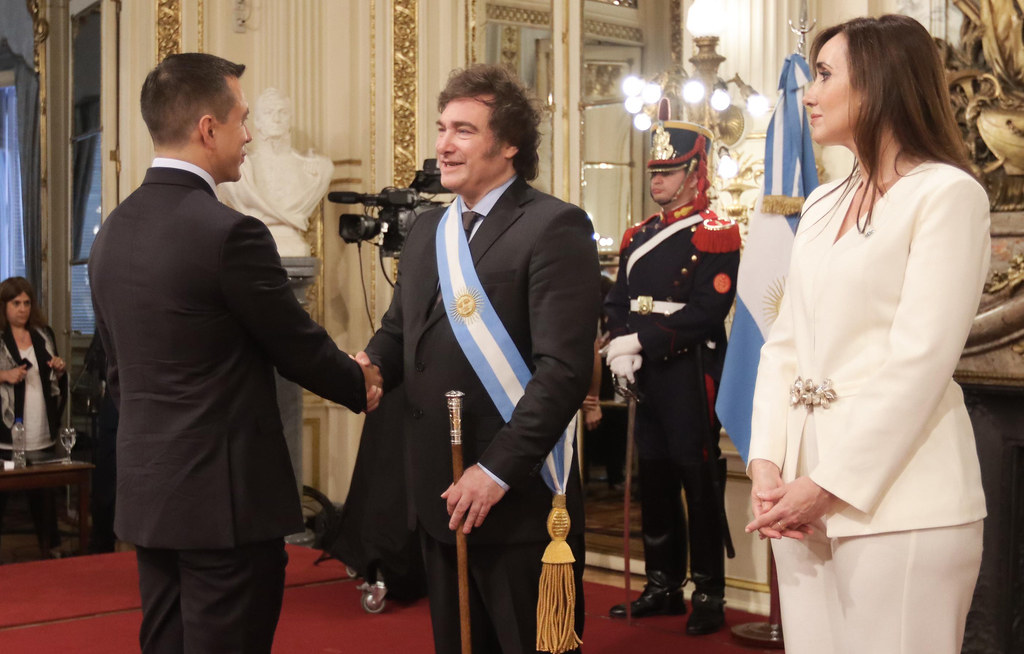

Argentina’s congress forced President Javier Milei on Friday to drop key measures from his inaugural economic overhaul. The development highlights the challenge of bringing about his promised free-market revolution.
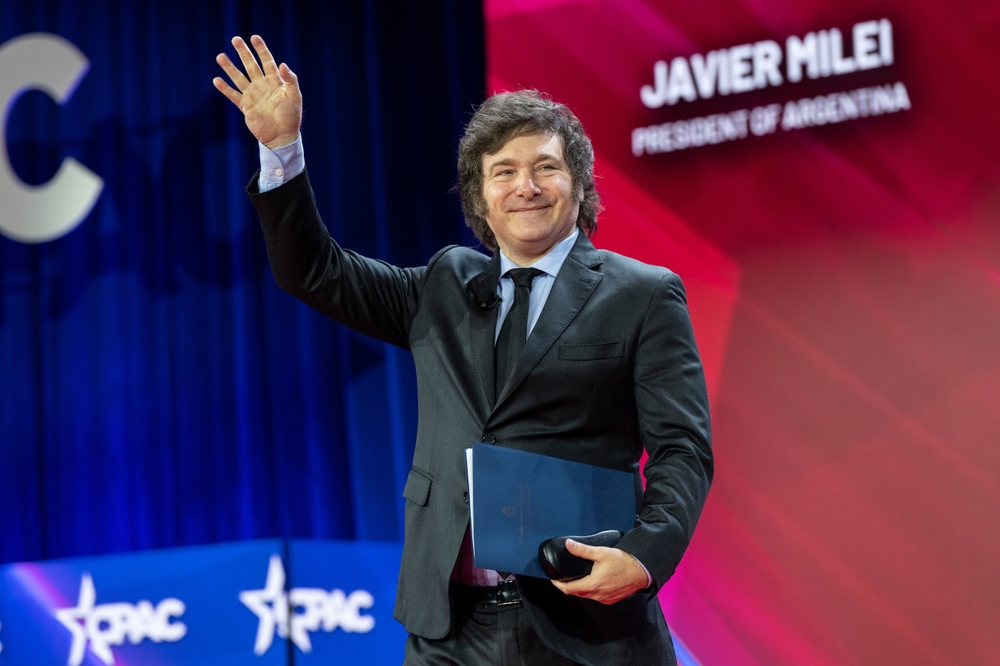
Who is this Chainsaw Wielding President?
Javier Milei became the President of Argentina on December 10, 2023, after winning the 2023 Argentine general election. He is a libertarian economist known for his confrontational and right-wing populist stance, positioning himself as an anarcho-capitalist. Milei rose to the presidency amid voter dissatisfaction with the political elite, whom his supporters blamed for hyperinflation, a currency in free fall, and increasing poverty in Argentina. His presidency began alongside Vice President Victoria Villarruel, following their electoral victory where they secured 55.65% of the vote in the second round against former economy minister Sergio Massa, who received 44.35%.
Javier Milei’s rise to prominence in Argentina is a story marked by his unconventional path and outspoken personality. Born on October 10, 1970, in Buenos Aires, Argentina, Milei embarked on a career that combined academia, economic consulting, and media presence, which ultimately catapulted him into the political arena.
Milei is a well-educated individual with a strong foundation in economics. He earned his undergraduate degree in economics from the Universidad de Belgrano and later pursued postgraduate studies in economics at ESEADE and the Universidad Torcuato Di Tella, two prestigious institutions in Argentina. His academic pursuits laid the groundwork for his later theories and economic philosophies.
Before entering politics, Milei was best known as an economist with a libertarian stance, advocating for minimal government intervention in the economy, the privatization of public services, and the abolition of the Central Bank of Argentina. His economic views are heavily influenced by classical liberal and libertarian thinkers, making him a polarizing figure in Argentina’s traditionally left-leaning or Peronist-dominated political spectrum.
Milei’s transition from an economist to a public figure was facilitated by his frequent appearances on television and radio, where he became known for his fiery rhetoric against the political establishment, corruption, and economic mismanagement by successive governments. His outspoken nature, complete with passionate outbursts and colorful language, helped him gain a significant following among those disenchanted with traditional politicians and the state of the Argentine economy.
Capitalizing on his growing popularity and the public’s desire for change, Milei entered politics. He co-founded the “La Libertad Avanza” party, which emphasizes libertarian principles and seeks to radically reform Argentina’s economic and political systems. His electoral campaign was marked by promises to dismantle the status quo and implement policies that promote free-market principles, fiscal responsibility, and individual liberties.
Javier Milei’s backstory is one of a maverick economist turned political figure who, through his unique blend of academic expertise, media savvy, and uncompromising libertarian ideals, managed to resonate with a significant portion of the Argentine electorate, ultimately leading to his election as president. His presidency is watched closely both domestically and internationally, as it represents a significant shift in Argentina’s political landscape.
A Landscape of Volatility and Change
Argentina returned to democracy in 1983 after a brutal military dictatorship that lasted from 1976 to 1983, known for its human rights abuses and the “Dirty War.” Since then, Argentina has experienced periods of political instability, including impeachments, protests, and a rapid succession of presidents, especially noticeable during the economic crisis of 2001.
The political arena has been largely dominated by the Peronist movement, a broad political spectrum that aligns itself with the legacy of Juan Domingo Perón and his wife, Eva Perón. Peronism has various factions ranging from left-wing to right-wing, affecting the country’s policies in welfare, labor rights, and national industry. The 21st century has seen the presidencies of Néstor Kirchner and Cristina Fernández de Kirchner, both of whom implemented policies aimed at social inclusion, state intervention in the economy, and a strong stance against neoliberal policies. The alternation between more conservative governments and those of the Kirchnerist variety has been a testament to the political diversity and division within the country.
Economically, Argentina has faced significant challenges, including high inflation, currency devaluation, and debt crises. The country has a history of cyclical economic crises, the most notable being the 2001 financial crisis, which led to a massive default on its international debt and widespread social unrest. Since then, the economy has experienced periods of growth and recession, influenced by global commodity prices, domestic policies, and international financial markets.
The government’s struggle to control inflation, maintain fiscal stability, and stimulate growth has been at the forefront of political discourse. Policies have swung between austerity measures, debt renegotiation, and attempts to boost domestic industry and consumption. The agricultural sector, particularly soybean exports, remains a critical component of the economy, alongside challenges in diversifying and modernizing the economy to ensure sustainable growth.
Javier Milei’s election as president represents a significant shift in the political and economic discourse, with his libertarian views advocating for substantial changes in the role of the state in the economy, signaling a new chapter in Argentina’s ongoing efforts to address its economic challenges and political divisions.
Javier Milei’s election as President of Argentina has elicited a broad spectrum of reactions both domestically and internationally, highlighting the global interest in Argentina’s political shift.
A Complex Global Reaction
Internationally, responses have ranged from cautious optimism to explicit support. The U.S. National Security Adviser Jake Sullivan congratulated Milei and the Argentine people for conducting free and fair elections, emphasizing a continued partnership based on shared democratic values. Brazilian President Luiz Inácio Lula da Silva wished the new government luck and success, underscoring respect for democracy and the electoral process without explicitly congratulating Milei. Other regional leaders like Colombia’s President Gustavo Petro and Chile’s President Gabriel Boric expressed their perspectives, with Petro noting the victory as a decision by the Argentine society, albeit with a tone of concern for Latin America. The European Union, through the President of the European Council Charles Michel, and Russia have both expressed intentions to continue or evaluate their cooperation with Argentina under Milei’s presidency. Ukrainian President Volodymyr Zelenskyy explicitly congratulated Milei, appreciating his stance in support of Ukraine.
Domestically, reactions were a mix of anticipation and skepticism. Argentine observers noted Milei’s ability to capitalize on widespread dissatisfaction with the previous government, attributing his victory to a combination of economic dissatisfaction and political fatigue. The expectation is that Milei, lacking a majority in Congress and without any governors in his camp, will need to seek consensus to implement his agenda. The nature of his governance—whether it will align more with his fiery campaign rhetoric or shift towards a more moderate stance observed later in his campaign—is a subject of considerable speculation.
These varied reactions underscore the complexity of Milei’s election and the array of expectations and concerns it has generated. The international community appears to be watching closely, hopeful for positive engagement but wary of the potential for drastic change Milei has promised.